

The long summer holidays in Ecuador have begun, and we kicked off our fourth summer school at Sacha Yachana Wasi Puerto Barantilla at the end of June.
My own students in Switzerland were dismissed for their holidays the previous Friday, so I boarded a plane on Saturday and, after a quick immigration process and a lost bag in torrential rain and a landslide, immediately drove on to Tena, where Michi picked me up on Sunday. Luckily, Joëlle had already taken care of my shopping list, so I only had to organize the last few missing items.
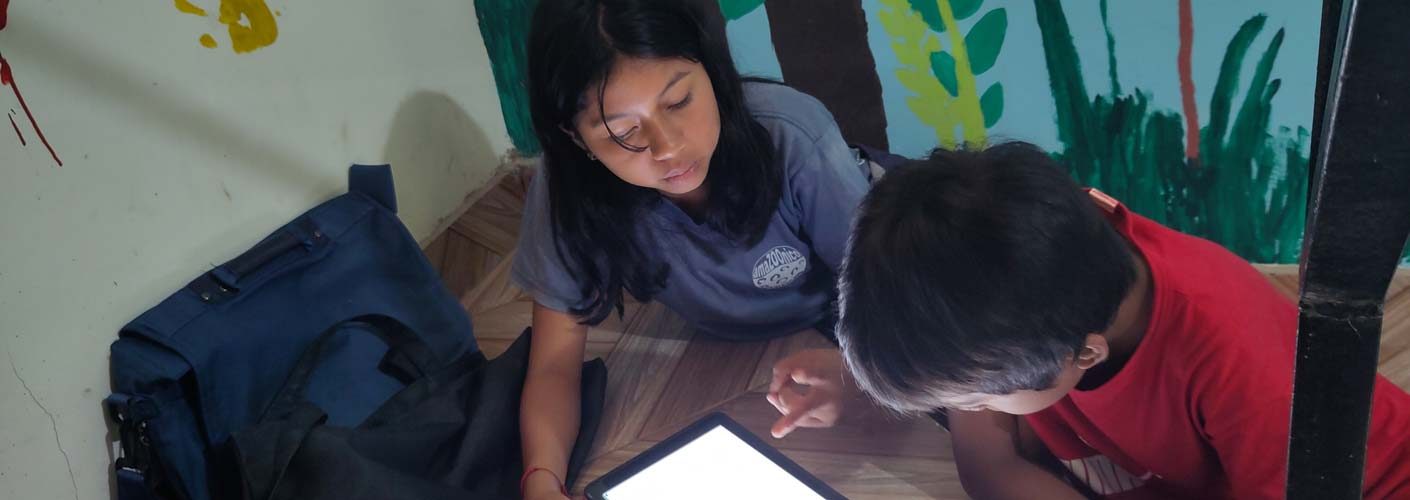
And then I was back at the schoolhouse, which needed to be awakened from its slumber. Reviewing materials, wiping down shelves, checking the printer, charging and testing the iPads… The latter are suffering quite a bit in the jungle and are getting on in years. One has unfortunately given up the ghost completely, and four others need constant charging. But at least we still have 10 more or less functioning iPads, which will become a bit of a problem when we have 13 children in the schoolhouse, but more on that later.
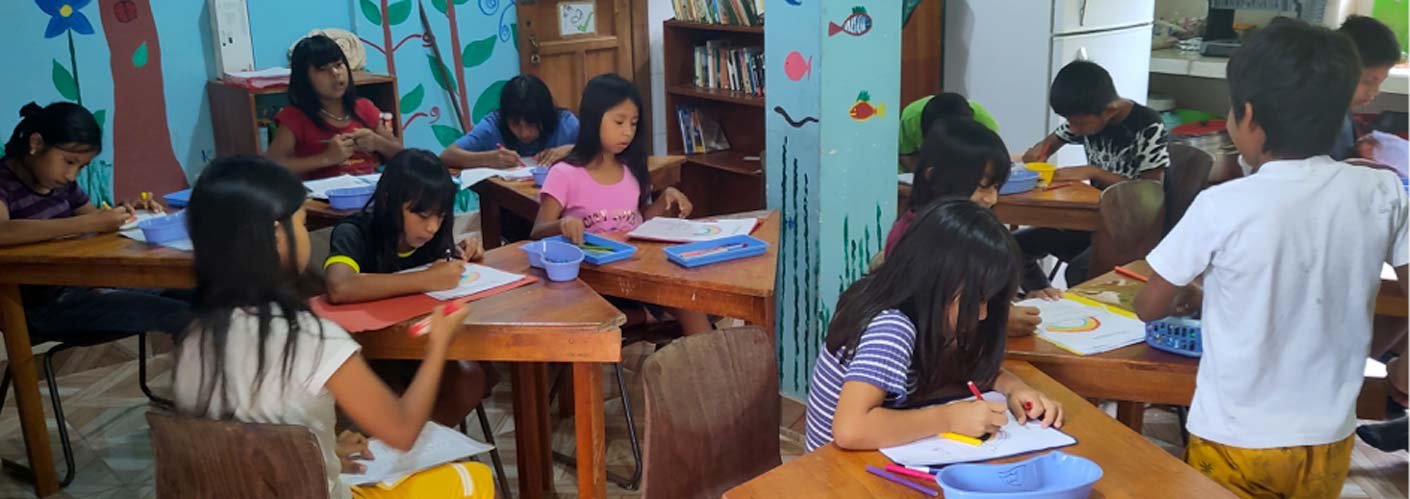
Based on the experiences of recent years, I deliberately opened up the groups on several days to bring a bit more of a camp atmosphere to the whole thing. This also included giving food (even) more priority and focusing more on English and math in the lessons, as well as various low-threshold projects and crafts. Since the majority are now reasonably literate, we only did Spanish when there really was time. This is more relaxed for both the kids and me and doesn’t rush us through the day quite so much.
I started sending out information in June, although it was already clear in March that I would be coming. The teachers at the small jungle school down by the river also passed on the information and contacted me – and everything else then literally happened by word of mouth. I still don’t understand how Jairo, our boat driver since the first summer school, actually knows exactly where to pick up the children…
A total of 30 children participated in the summer school, ten of whom were “new” children, while the others have been attending for several years. A few came only once, but most attended regularly two days a week and were thus able to proudly receive their certificates at the end. With the groups being opened up, there were up to 13 children present on some days. The school building was already at capacity, and the children had to share tables and trays, which not everyone managed equally well. Sharing materials and being considerate of one another seems to be largely unknown concepts, so everyone is primarily looking out for themselves.
Well, and then everything proceeded as usual, with the usual shocks for me when I realize that group work isn’t working at all, even the older children can’t properly distinguish and add hundreds and ones, the students in the Colegio program are barely able to utter or read a word of English – I really don’t know what they’re doing there – and after explaining that we just had almond cake for dessert, I’m asked what almonds are.
… The reward comes from the wonderful moments: when I suddenly see them quizzing each other on vocabulary in groups of three; when the high school student realizes that 70 x 6 can even be calculated mentally because she knows that 7 x 6 = 42 and she just needs to add a zero; when the “newcomers,” who are so shy at first that they don’t say a word, suddenly join in; when we determine weights with scales and everyone is fascinated by the statics of eggshells that can support so much weight; when no one knows how many grams a libra weighs, but they immediately tell me that it’s about five medium-sized potatoes (which is correct); when we discover Uno and their favorite game is one that involves finding and spelling words; when every simple physics experiment is observed and imitated with joy. And of course, when I see the dedication with which they work with the Anton learning app. What I particularly like about this EU-funded app is that I can assign individual exercises to each child, preventing the tiresome copying that so many use to get by throughout their school years.
My big goal for this year was telling time, which I practiced with all the students every single day. They made tremendous progress, and the final competition, where two discarded but still perfectly functional sports watches were up for grabs, was a huge success.
The winner among the boys was one of the younger ones with a remarkably quick mind. The watch was much too big for his wrist, so the strap needed a few more holes, but he was thrilled and had grasped all the functions after 15 minutes—functions I always have to consult the manual for. My late parents would certainly have been as delighted as I was to see their sports watches now in the jungle.
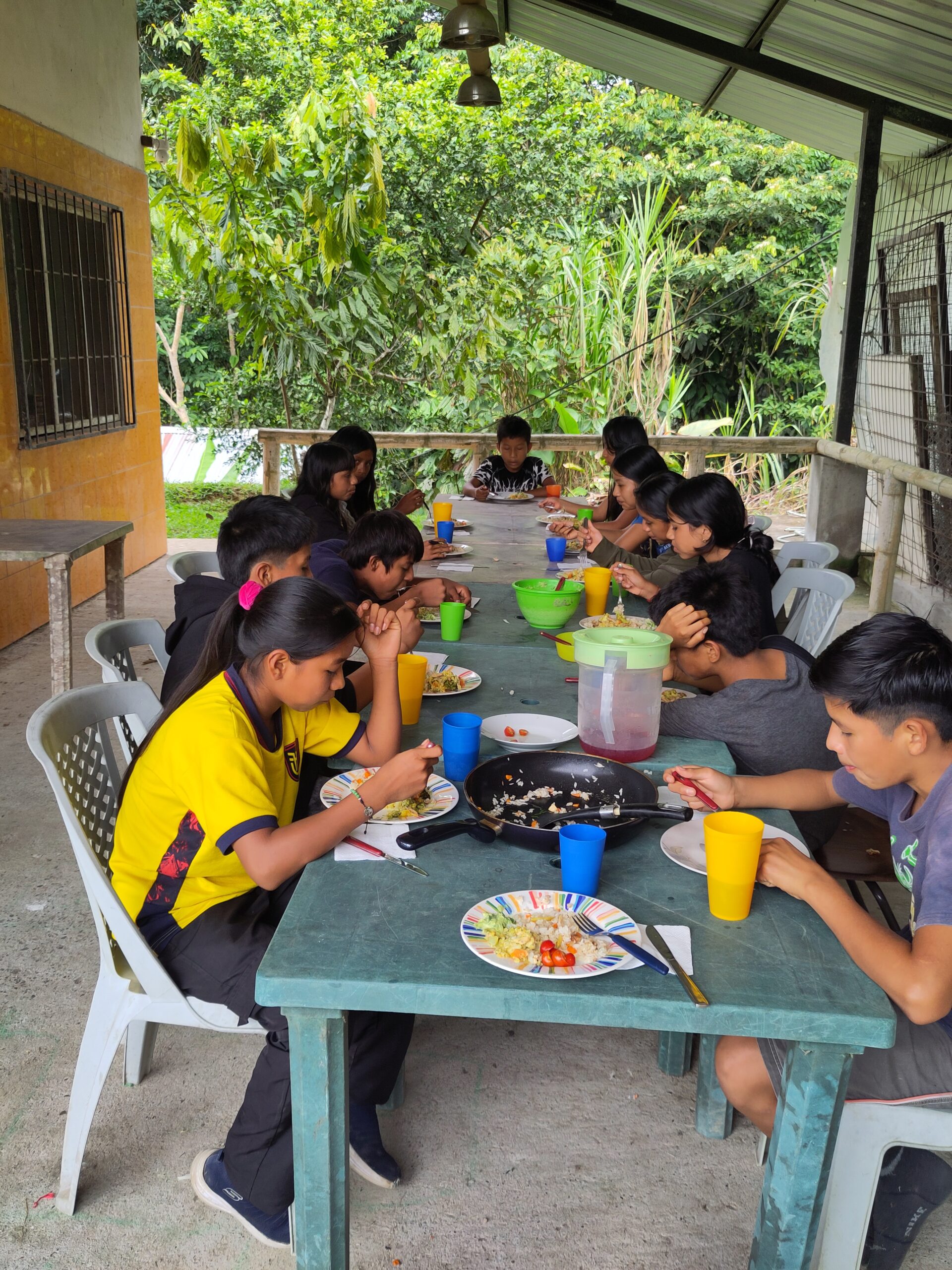
But the most important part of the days was always the meals. First, the traditional milk-based porridge with cinnamon, vanilla, and lots of fruit (and recently, a little cream too), which is eaten during the first break, and then, of course, lunch with dessert. Incidentally, the older the children are, the more willing they are to try something new—so for many, it was chickpeas and spinach for the first time (we had a real spinach fanatic who ate the entire leftover pot) or cauliflower. With the younger children, however, there’s a lot of resistance to new things. Even pasta with Bolognese sauce didn’t exactly spark enthusiasm, which probably has something to do with the fact that most of them had never eaten pasta before and only knew the small soup noodles. Rice, on the other hand, always works—even though I personally find white rice highly questionable from a nutritional standpoint. But I manage to sneak in a few vitamins in the form of corn or peas. Since many children also refuse to eat carrots, they’re always grated so they’re not too noticeable in either the rice or the stew. And nobody says no to carrot muffins anyway. Setting the table (even with napkins), waiting until everyone is at the table, eating together, waiting until everyone has finished, and clearing up together is working better and better. Many even try eating with a knife and fork, something completely new to them, because that’s what I do. I find that quite touching. Normally, they only eat with a spoon.
… And after barely a month, it’s all over again, and I’m asked why I’m not staying. It would be great to have more volunteers for the month of August so we can extend the program. See you soon, Sacha Yachana Wasi!